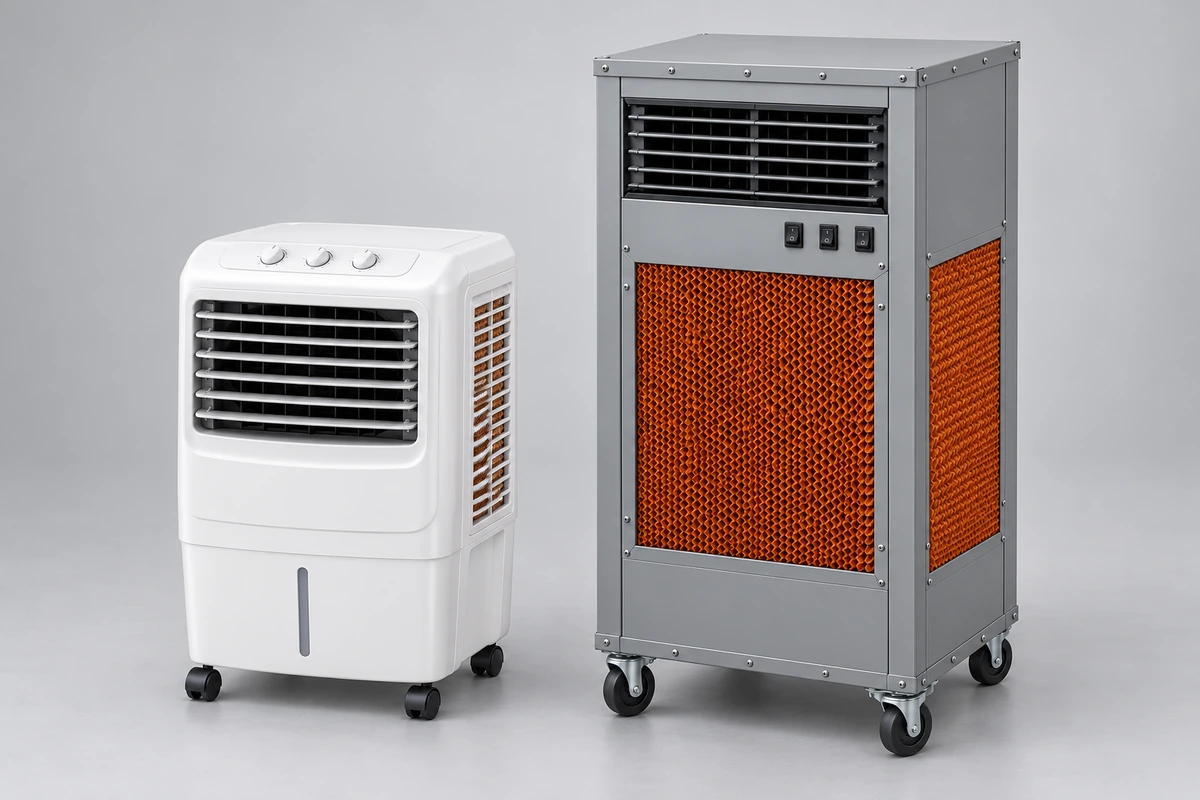
Quick answer: choose a metal-body cooler for shops, workshops, terraces, verandas and big rooms, wherever it runs long hours, sits in the sun or gets knocked about. It is tougher and usually moves more air. Choose a plastic-body cooler for bedrooms and small rooms, where light weight and looks matter more. The best metal coolers pair the metal body with a rust-proof plastic or GRP (glass-reinforced plastic) water tank, so the water never touches metal. AUSH Blower Coolers use this design.
Metal vs Plastic, Point by Point
- Strength: metal takes knocks, heavy use and frequent moving; plastic can crack if dropped or hit.
- Sun and weather: years of sunlight can fade plastic and make it brittle. A well-painted metal body handles outdoor and semi-outdoor spots better.
- Rust: plastic never rusts. Metal needs a good paint finish, and a scratch left open can rust, especially in coastal air. A rust-proof tank removes the biggest risk.
- Heat and fire: metal does not soften or melt near ovens, furnaces or hot machines, while plastic can deform close to a heat source.
- Airflow: high-airflow desert and industrial coolers are usually metal-bodied, because a metal frame holds a bigger fan or blower rigidly.
- Weight: metal coolers are heavier, which makes them stable in wind but harder to carry. Plastic ones are easy to move between rooms.
- Repairs: a dented metal panel can often be straightened and repainted; a cracked plastic panel usually needs replacing.
- Looks: plastic allows sleeker shapes and colours that suit bedrooms and living rooms.
When to Choose a Metal-Body Cooler
- Shops, showrooms, offices, clinics and workshops that run the cooler 8 hours or more a day
- Terraces, verandas, balconies and other spots exposed to sun and dust
- Halls, godowns and big rooms up to about 800 sq ft per 2,300 CFM cooler
- Places near heat sources, such as kitchens, bakeries and machine areas
- Events, where coolers are moved from site to site
When a Plastic Cooler Makes Sense
- Bedrooms and small rooms, where a compact, lighter unit is enough
- Rented homes, if you move often and want a light cooler
- Coastal homes, if you can't keep a metal body's paint in good condition
Do Metal Coolers Rust?
The water tank decides most of the rust risk. A metal tank holds water against metal all season, while a GRP or plastic tank cannot rust at all. Before you buy, check what the tank is made of. To make a metal cooler last:
- Drain the tank and dry the cooler completely at the end of the season.
- Touch up scratches on the body with paint before they rust.
- Keep the cooler on a stand, off wet floors.
- Cover it while it is stored through the monsoon.
AUSH Blower Coolers: Metal Body, GRP Tank
AUSH Blower Coolers combine a metal body with a GRP water tank. All four sizes move 2,300 CFM, cool up to about 800 sq ft, draw 750 W on 220 V single phase, and carry a 2-year warranty. The tank size only changes how long the cooler runs between refills.
Prices include GST (October 2026). At ₹10 per unit, a Blower Cooler costs about ₹7.50 an hour to run. For bigger spaces, see the industrial duct cooler price list.
Frequently Asked Questions
Is a metal cooler better than a plastic cooler?
For shops, workshops, terraces and long daily use, yes: it is sturdier, handles sun and heat better, and usually moves more air. For a bedroom, a plastic cooler is lighter and often looks better.
Do metal body coolers rust?
The body can rust where the paint is scratched, so touch up scratches. The bigger risk is a metal water tank. A metal cooler with a GRP or plastic tank, like AUSH Blower Coolers, keeps water away from metal.
Which lasts longer, a metal or a plastic cooler?
With basic care, such as draining and drying it after the season and touching up scratches, a metal cooler usually outlasts a plastic one in heavy or outdoor use. Plastic can become brittle after years in the sun.
Is a metal-body cooler safe?
Yes, when it is plugged into a properly earthed three-pin socket. As with any metal appliance, good earthing matters.
Which cooler is best for a terrace or veranda?
A metal-body cooler, because it handles sun, dust and wind better than plastic. Keep it shaded if possible so the water stays cooler.