Quick answer: put the cooler at an open window or door so it pulls in fresh outside air, open a window on the opposite side so humid air can leave, and keep the pads fully and evenly wet. These three things matter more than anything else. Ice helps only a little, and only for a short time. For a steady boost, feed the pads with chilled water from a small chiller, which adds refrigeration cooling on top of evaporation.
How an Air Cooler Actually Cools
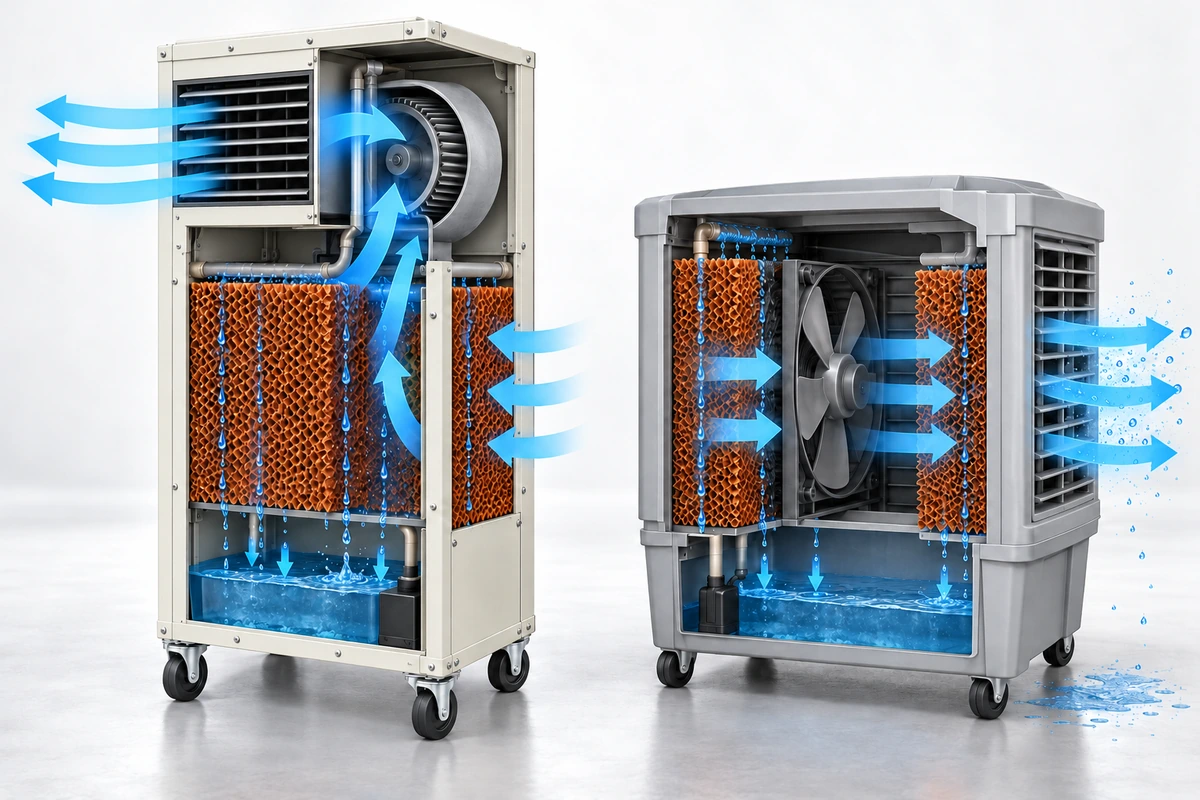
A desert or room cooler blows air through wet pads. As the water evaporates, it takes heat out of the air. The drier the incoming air, the more water evaporates and the colder the air comes out.
Evaporation alone has a floor: the wet-bulb temperature. The water on the pads settles close to it, and the air leaving a cooler cannot go below it. On a dry 40°C day at 20% humidity the wet-bulb is about 23°C, so a cooler can do a lot. On a humid 32°C day at 70% humidity it is about 27.5°C, so there is little left to gain. That is why the same cooler feels great in April and weak in July.
Placement and Airflow
- 1. Put it at an open window or door, facing in. A cooler should breathe fresh outside air. Inside a closed room, it keeps re-wetting the same air until the room is humid and sticky.
- 2. Open an exit on the opposite side. A window, door or exhaust fan on the far side lets humid air leave and keeps fresh air flowing through. This single step fixes most "cooler not cooling" complaints.
- 3. Keep the cooler out of direct sun. A sun-baked body and tank warm the water, which then cools the air less.
- 4. Aim it at people. Raise the cooler to bed or seating height and set the louvres toward where people sit. Moving air on the skin feels cooler.
- 5. Cut heat coming in. Close curtains on west-facing windows in the afternoon and switch off heat sources you don't need.
Pads, Water and Pump
- 6. Wet the pads before starting the fan. Run the pump alone for 3–5 minutes so the pads are soaked when air starts flowing.
- 7. Check that every pad is evenly wet. Dry streaks mean blocked holes in the water distribution pipe or scale on the pads. Clean them.
- 8. Clean or replace worn pads. Honeycomb pads usually last a few seasons with cleaning; wood-wool (grass) pads usually need replacing every season. Clogged or sagging pads let air bypass the water.
- 9. Keep the water topped up and clean. Drain, clean and refill the tank at least once a week. This stops smell and mosquitoes and keeps the pump from running dry.
- 10. Use the right mode for the weather. In dry heat, run the fan on high with the pump on. On very humid days, switch the pump off and use the fan alone.
Does Ice in an Air Cooler Help?
11. A little, for a short time. A couple of kilos of ice melts within an hour and mixes into a large tank, so the air coming out of a 2,300 CFM cooler gets cooler by well under 1°C. Ice is fine as a quick trick for a small personal cooler, but it is not a real fix for a big room.
Chilled-Water Pads: Going Below the Evaporation Limit
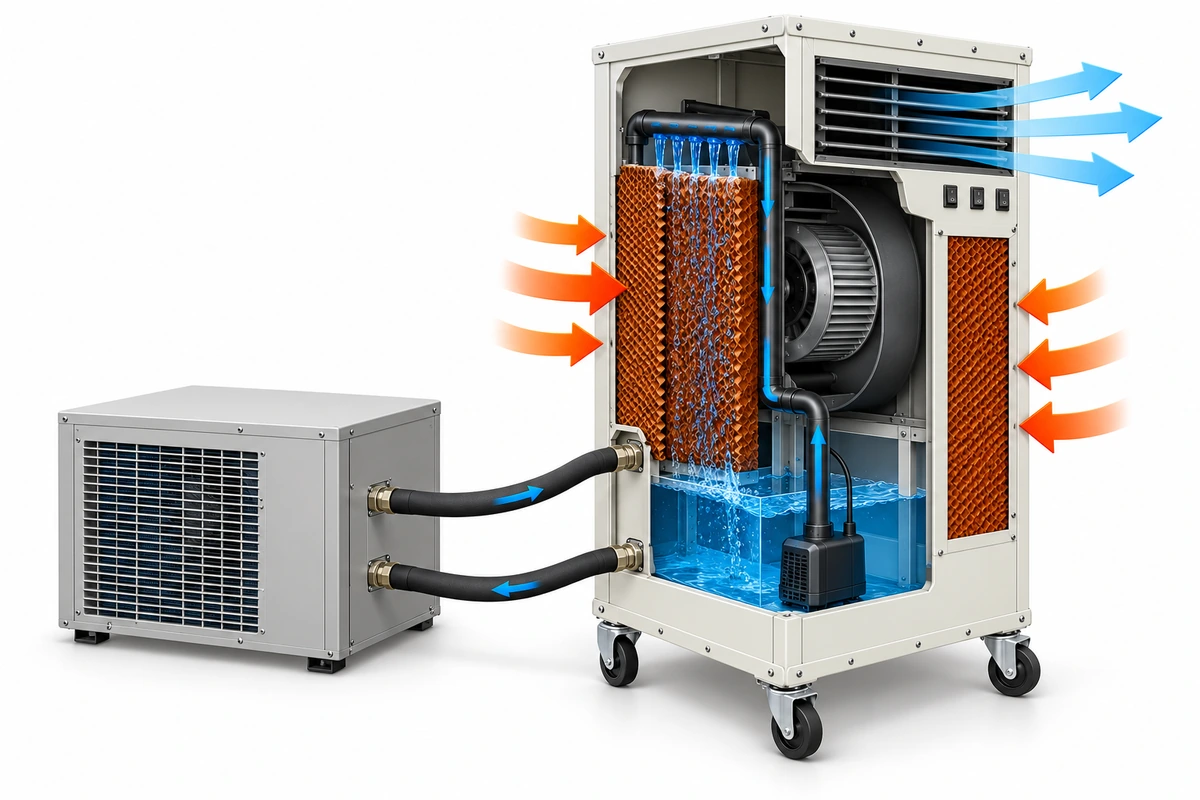
12. Feed the pads with chilled water. A plain cooler cannot get colder than the wet-bulb temperature. A small water chiller gets around that limit by cooling the water that the cooler's pump circulates over its honeycomb pads, as shown in the diagram at the top of this page.
- How it works: the AUSH Domestic Chiller uses a small refrigeration system (R134a refrigerant, reciprocating compressor) to supply water at about 20°C. That is below the wet-bulb temperature on most summer days, so the pads cool the air in two ways: by evaporation as usual, and by direct contact with colder water, much like air passing over a cold coil.
- Why it beats ice: it works continuously, there is no ice to buy, and the pad water stays at a steady temperature.
- When it helps most: the extra cooling it adds matters most when evaporation is weak, on humid days and in the evenings, and in smaller rooms. How much colder the air gets depends on the chiller's capacity compared with the cooler's airflow, so ask us to match a chiller to your cooler and room.
- Models: 10 L/hour for ₹13,300 and 20 L/hour for ₹15,200, including GST. Both run on 220 V single phase and carry a 1-year warranty.
Is Your Cooler the Right Size?
No tip can make an undersized cooler cool a big room. Allow about 3 CFM per sq ft for a normal room with a 10 ft ceiling, and 5 CFM per sq ft for kitchens, shops and crowded rooms. An AUSH Blower Cooler moves 2,300 CFM and covers up to about 800 sq ft. See our air cooler size guide for a room-by-room chart. If you live in a humid coastal city, read why air coolers stop working in humid weather first.
Frequently Asked Questions
Does putting ice in an air cooler help?
Only a little, and briefly. The ice melts within an hour and lowers the air temperature by well under 1°C in a large cooler. A chiller that keeps the pad water at about 20°C gives a steady effect instead.
Why is my air cooler not cooling the room?
The usual causes are a closed room with no exit for humid air, dry or clogged pads, a blocked water distribution pipe, low water, or humid weather. Open a window opposite the cooler and check that the pads are evenly wet.
Should the room be closed when using an air cooler?
No. Keep a window or door open on the side opposite the cooler. A closed room fills with humid air and the cooler stops cooling.
How does a chiller make a desert cooler colder?
It chills the water that flows over the honeycomb pads to about 20°C, below the air's wet-bulb temperature on most summer days. The air is then cooled by contact with the cold water as well as by evaporation, so it can come out colder than with evaporation alone.
How often should I change the water in an air cooler?
Top it up daily as needed, and drain, clean and refill the tank at least once a week to prevent smell and mosquito breeding.
Which direction should an air cooler face?
Place it at an open window or door so it draws in outside air and blows into the room toward where people sit, with an exit on the opposite side.