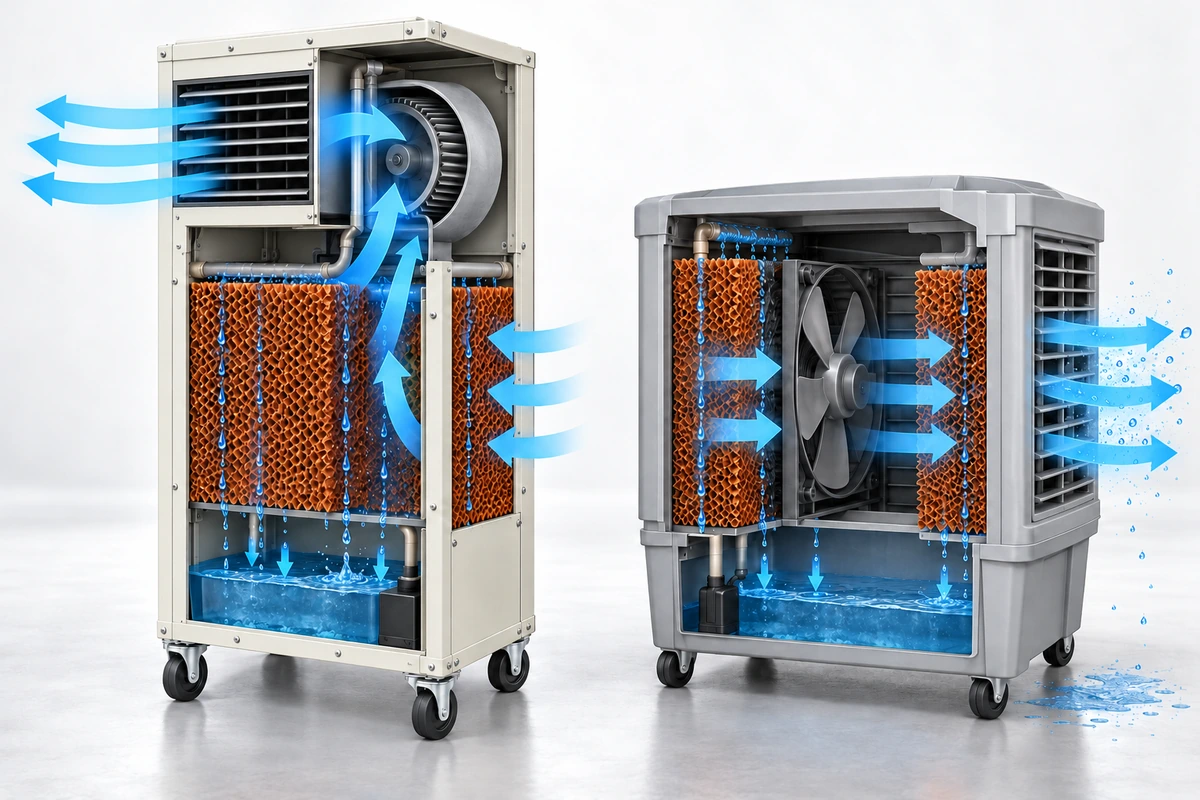
Quick answer: an AUSH Blower Cooler uses about 75% less water than a conventional desert cooler for the same cooling job. The saving comes from how it is built. In a desert cooler, a fan sits right behind the wet pads and pulls water droplets off them, throwing that water into the room. In a blower cooler, the blower sits above the honeycomb pads, so air is drawn through the pads and turns upward into the blower while loose water falls back into the tank. The water stays in the cooler and is used for cooling, not lost as spray.
Why Water Use Matters Now
Water is already scarce in much of India, and summer is when it is scarcest. NITI Aayog's Composite Water Management Index (2018) found that about 600 million Indians face high to extreme water stress. Summer tanker supply is a familiar sight across Maharashtra, from Marathwada to the edges of Pune and Nashik. Summer is also exactly when air coolers run hardest.
An air cooler cools by evaporating water, so it will always use some. But a large share of what a conventional cooler draws from its tank is not used for cooling at all. Cutting that waste means fewer refills, less load on the household or factory supply, and the same comfort.
Where an Air Cooler's Water Goes
- Evaporation (useful): water evaporating from the pads is what cools the air. This is the water you pay for cooling with.
- Carry-over or drift (wasted): droplets pulled off the wet pads by the fan and blown into the room. You see it as a fine spray, wet floors near the cooler and a damp, sticky feel.
- Overflow and splashing (wasted): water that runs off unevenly wetted pads or splashes out of the tank.
- Draining and cleaning (necessary): the weekly drain and refill that keeps the tank fresh.
The blower design attacks the biggest avoidable loss: carry-over. The diagram at the top of this page shows the difference.
How a Desert Cooler Wastes Water
In a typical desert cooler, a large axial fan sits directly behind the cooling pads and pulls air straight through them at high speed. Water running down the pads is in the direct path of that air stream. Loose droplets are torn off the pads and thrown out through the front grille. The faster the fan, the more water it throws.
That water does almost nothing for cooling. It lands on the floor, furniture and people as spray, adds dampness to the room, and drains the tank faster, so you refill more often.
How a Blower Cooler Saves 75%
- Blower above the pads: in an AUSH Blower Cooler, the blower is mounted above the honeycomb pads instead of directly behind them.
- Air turns, water falls: air is pulled through the pads and then turns upward into the blower. Water droplets are much heavier than air, so they cannot make that turn. They drop back down into the tank.
- Honeycomb pads hold water evenly: the angled channels of a honeycomb pad spread water across the whole pad and hold it there for evaporation, rather than letting it stream off.
- Result: by AUSH's figures, about 75% less water than a conventional desert cooler for the same cooling, with no spray in the room.
What 75% Less Water Means Over a Summer
As an example only, suppose a desert cooler in a hot, dry room uses 100 litres of water a day. An AUSH Blower Cooler doing the same job would use about 25 litres, saving about 75 litres a day.
- One cooler, 120 summer days: about 9,000 litres saved
- A shop with four coolers: about 36,000 litres saved in a season
Your own figures will depend on the weather, airflow and hours of use, since hotter, drier days evaporate more water. The proportion saved is what stays the same.
Other Benefits of the Blower Design
- No wet floors: no spray means no slippery floor tiles, damp furniture or wet stock in a shop.
- Less sticky air: water that would have been thrown into the room as droplets no longer adds to the dampness.
- Fewer refills: the tank lasts longer, which matters most in shops, workshops and homes that fill coolers by bucket.
- Strong airflow: a blower (centrifugal fan) builds pressure, so AUSH Blower Coolers move 2,300 CFM with a long air throw, enough for up to about 800 sq ft.
AUSH Blower Coolers
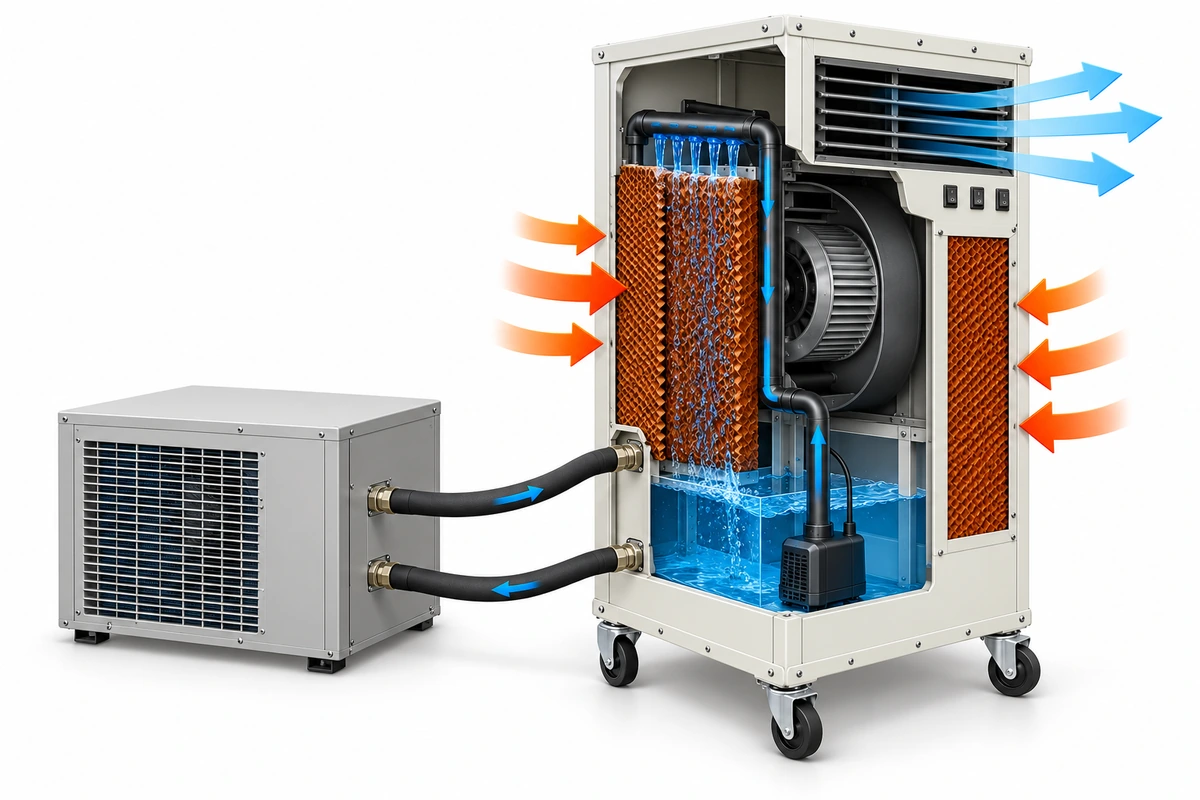
AUSH Blower Coolers have a metal body, a GRP water tank, a 750 W blower moving 2,300 CFM, and a 2-year warranty. All four sizes cool the same area; a bigger tank just runs longer between refills.
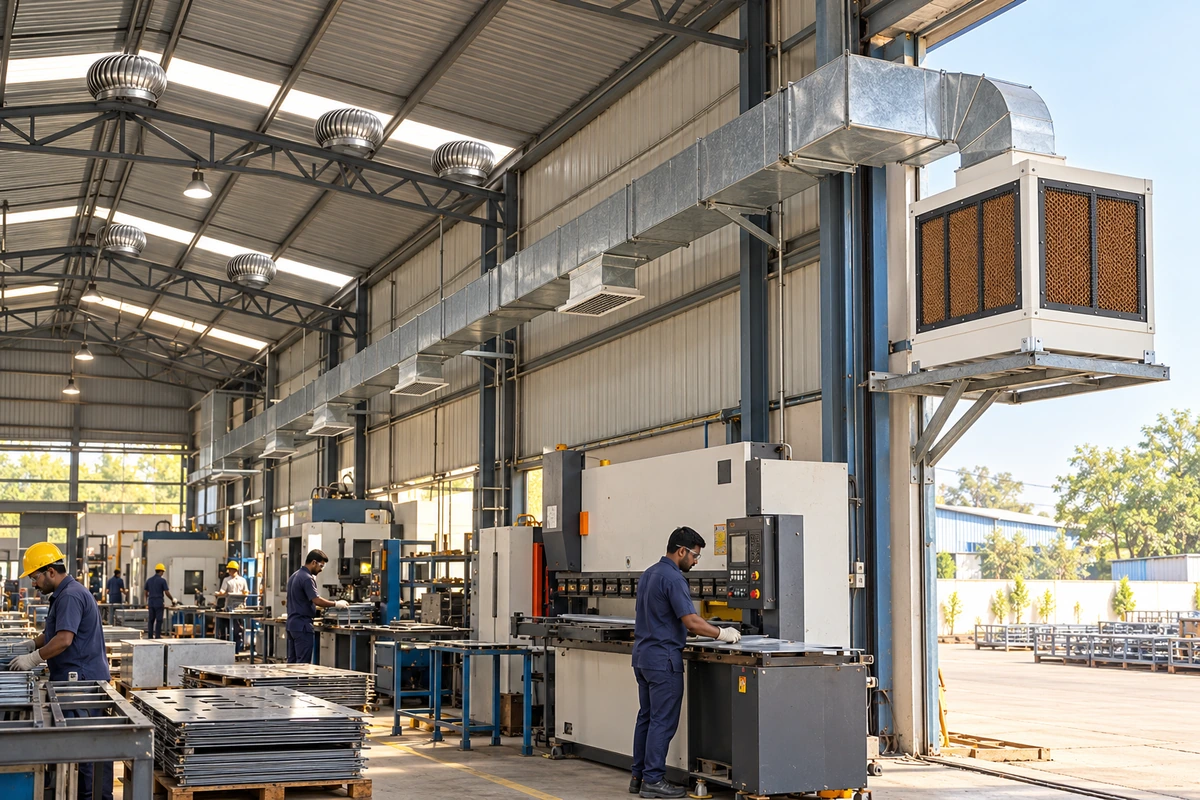
Prices include GST (October 2026). For workshops, godowns and halls, AUSH Industrial Duct Coolers use the same blower principle, with the same 75% water saving, at up to 11,500 CFM.
More Ways to Save Water With Any Cooler
- Run the pump only with the fan: a pump running with the fan off just circulates water and lets it overflow or drip.
- Use fan-only mode on humid days: evaporation is weak when the air is already humid, so the water does little. Switch the pump off.
- Fix leaks and keep pads clean: clogged pads make water stream off one side instead of wetting the whole pad.
- Reuse drained water: the weekly drain water can go to plants or floor washing if you haven't added anything to the tank.
- Choose the right size: an oversized cooler in a small room wastes water as well as power. See our air cooler size guide.
Frequently Asked Questions
Do blower coolers use less water than desert coolers?
Yes. By AUSH's figures, an AUSH Blower Cooler uses about 75% less water than a conventional desert cooler for the same cooling, because the blower above the pads does not pull water droplets into the room.
Why does my desert cooler throw water into the room?
Its fan sits directly behind the wet pads and pulls air through them at high speed, tearing loose droplets off the pads and blowing them out. Dry or clogged pads, overfilled tanks and very high fan speeds make it worse.
How much water does an air cooler use in a day?
It depends on the weather, airflow and hours of use. Hot, dry days evaporate the most. A large cooler running all day in dry summer heat can use tens of litres, and a blower design cuts that by about 75% compared with a conventional desert cooler.
Does using less water mean less cooling?
No. The water a blower cooler saves is the water a desert cooler throws out as spray, which does almost nothing for cooling. The water that evaporates from the pads, which does the cooling, is still used.
Can I use RO reject water in an air cooler?
It will work, but RO reject water carries more dissolved salts, which leave scale on the pads faster. If you use it, clean or descale the pads more often.