Quick answer: cool a factory or tin-roof shed in three steps, in this order. First, stop roof heat getting in, with a reflective roof coating, under-deck insulation and roof ventilators. Second, replace the hot air fast enough, about 20–30 air changes an hour, using evaporative duct coolers. Third, give that air a way out on the opposite side. A 3,000 sq ft shed with a 15 ft roof needs about 22,500 CFM, which two AUSH 120 L Industrial Duct Coolers supply for about ₹8,600 a month in electricity.
Why Tin-Roof Sheds Get So Hot
Metal roofing sheets in direct sun get far hotter than the outside air and radiate that heat down onto the people and machines below. Hot air also collects under the roof. Motors, furnaces, moulding machines and lighting add more heat. By afternoon, a closed shed can feel hotter inside than out.
Step 1: Cut the Heat Coming In
- Reflective roof coating: white or "cool roof" paint on the sheets reflects much of the sun's heat before it enters.
- Under-deck insulation: an insulation layer under the sheets stops radiant heat reaching the floor.
- Roof ventilators: turbo ventilators or a ridge vent let the hottest air under the roof escape.
- Shade the west side: afternoon sun on west walls and openings adds the most heat.
- Remove heat at the source: put exhaust fans or hoods next to ovens, furnaces, moulding machines and compressors.
These steps cost little compared with cooling equipment, and they make every cooler you add more effective.
Step 2: Size the Cooling by Air Changes
CFM needed = floor area (sq ft) × average height (ft) × air changes per hour ÷ 60
- 20 air changes an hour: warehouses, godowns and light assembly.
- 30 air changes an hour: workshops with hot machines, crowded production floors and kitchens.
With a 10 ft ceiling this works out to roughly 3 CFM per sq ft at 20 changes and 5 CFM per sq ft at 30 changes, the same figures as our air cooler size guide. Taller sheds hold more air, so they need proportionally more CFM.
Worked Example: a 3,000 sq ft Workshop
- Shed: 3,000 sq ft, 15 ft average height, machines running, so 30 air changes an hour.
- Airflow needed: 3,000 × 15 × 30 ÷ 60 = 22,500 CFM.
- Coolers: two AUSH 120 L Industrial Duct Coolers at 11,500 CFM each, 23,000 CFM in total.
- Purchase: 2 × ₹43,100 = ₹86,200 including GST.
- Electricity: 2 × 1.66 kW = 3.32 kW. At 10 hours a day, 26 working days and ₹10 per unit, about ₹8,600 a month.
Air conditioning the same shed is rarely practical. At 125–200 sq ft per ton it would need 15–24 tons of AC, and an open-door shed under a hot metal roof leaks that cooling away. See the duct cooler price list for every model's coverage and cost.
Step 3: Give the Air a Way Out
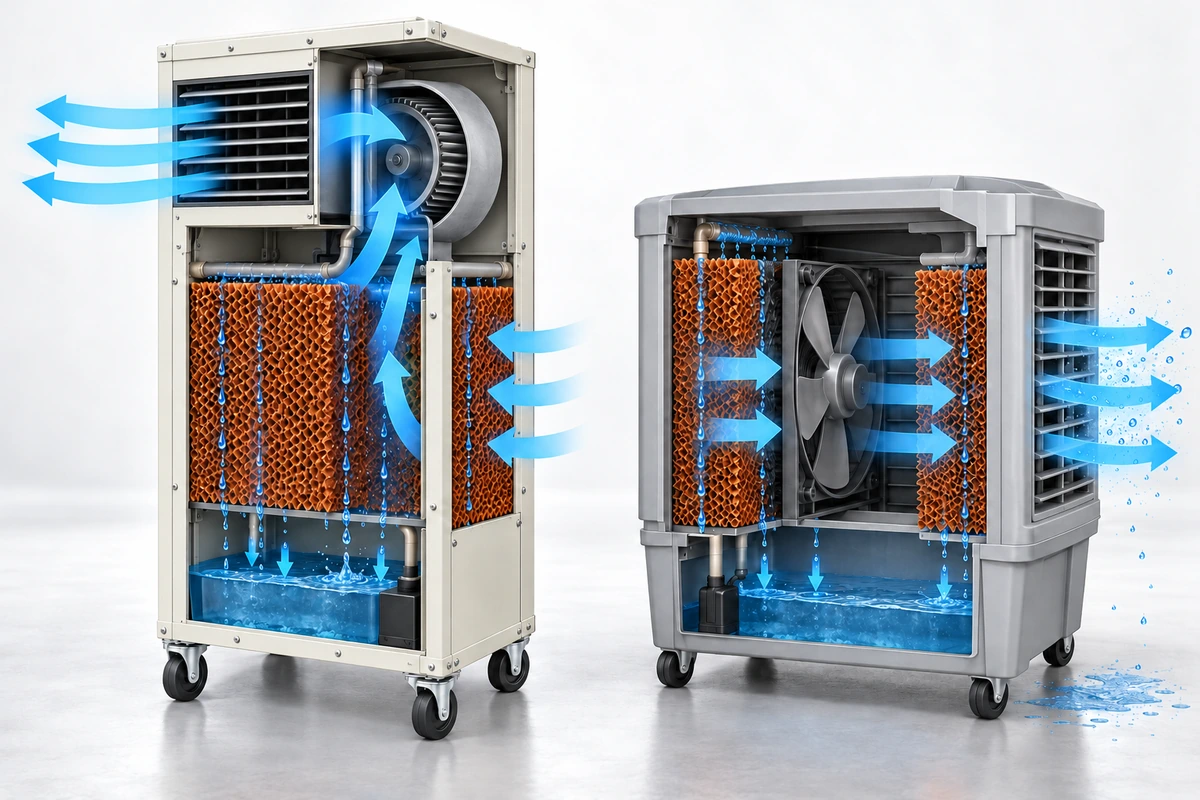
An evaporative cooler works by pushing fresh outside air through wet pads. That air has to leave the building again. If the shed is closed, humid air builds up and the cooling stops. Keep openings, such as windows, rolling shutters, louvres or exhaust fans, on the side opposite the coolers, with enough total opening for all the air the coolers push in.
Where to Place Duct Coolers
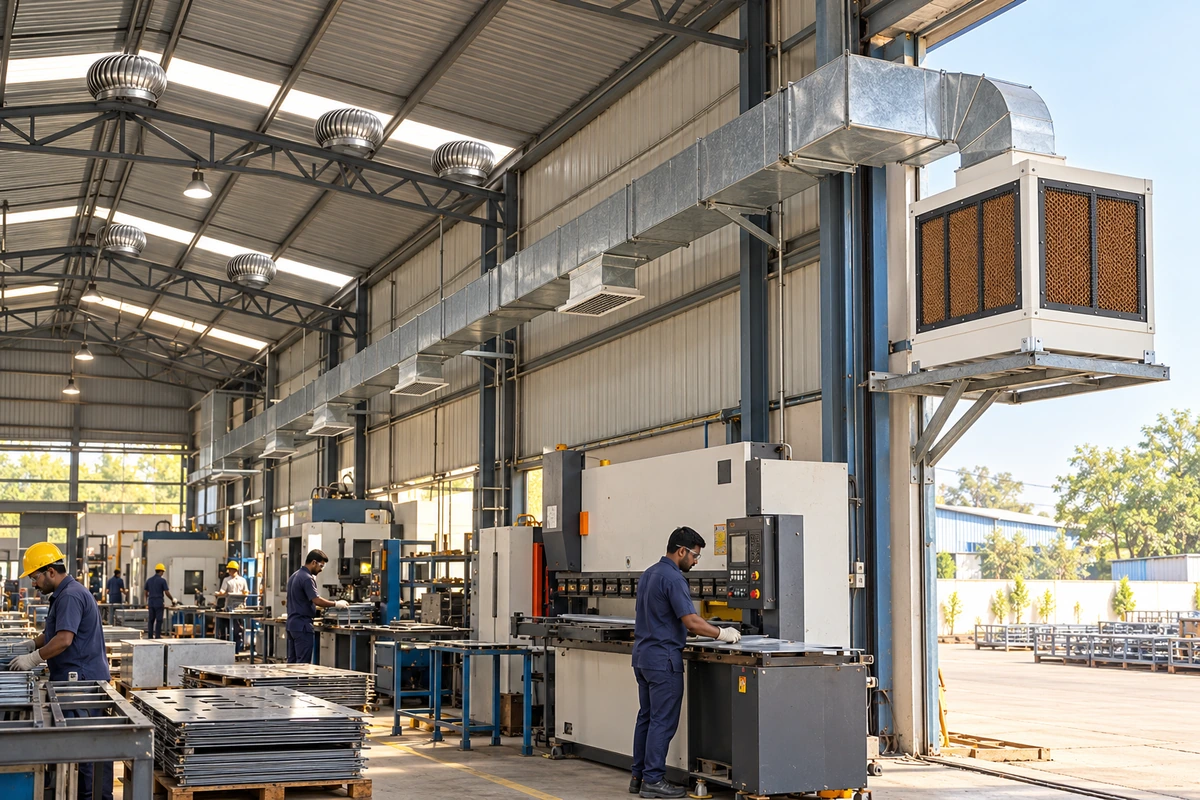
- Outside the shed: mount the cooler on a wall bracket or roof stand so it draws in fresh outdoor air, not hot shed air.
- In shade if possible: water in a tank in full sun warms up and cools less.
- Down to worker height: run ducting with grilles to about 7–8 ft above the floor over workstations, instead of blowing air into the roof space.
- Spot cooling for very large sheds: cool where people work, such as assembly lines, packing tables and loading bays, instead of the whole volume.
- Even spacing: spread the coolers along one long wall, with exits on the opposite wall.
Power and Water Planning
- Power: the AUSH 60 L Duct Cooler runs on 220 V single phase; the 90 L, 120 L and 150 L models need 415 V three phase.
- Water: keep a water line close by. The 150 L model runs longest between refills, and the blower design keeps water on the pads instead of throwing it into the air, saving about 75% water (see how blower coolers save water).
- Maintenance: clean the pads and tank regularly. Hard water leaves scale that blocks the pads and cuts cooling.
When Evaporative Cooling Is Not Enough
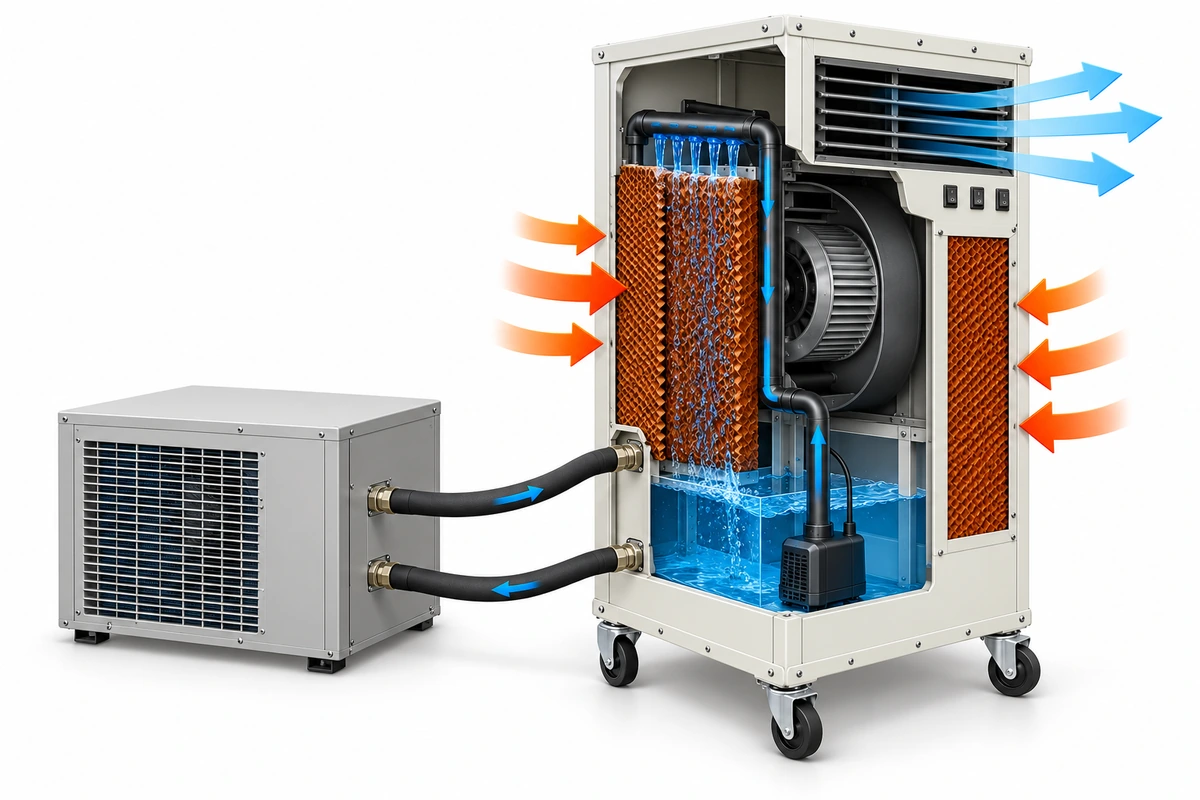
During the monsoon and in humid coastal areas, evaporative cooling weakens sharply (see why air coolers stop working in humid weather). On very humid days, run the coolers in fan-only mode, with the pump off, for ventilation. Processes that need a fixed temperature, such as moulding machines, hydraulic oil or lasers, need an industrial chiller on the machine, not air coolers for the room.
Frequently Asked Questions
How can I reduce heat in a tin-roof shed?
Coat the roof with reflective white paint, add insulation under the sheets, fit turbo ventilators or a ridge vent, and exhaust hot air near machines. Then add evaporative coolers with exits on the opposite side.
How many coolers do I need for a factory?
Multiply floor area by average height by 20–30 air changes, and divide by 60 to get CFM. A 3,000 sq ft shed with a 15 ft roof and hot machines needs about 22,500 CFM, or two 11,500 CFM duct coolers.
Is an industrial cooler better than AC for a factory?
For open, ventilated sheds in dry weather, yes. It costs a fraction of AC to buy and run, and it works with doors open. AC suits only sealed, insulated rooms.
Should doors and windows be open when using an air cooler?
Yes. Keep openings on the side opposite the coolers so humid air can leave. A closed space stops an evaporative cooler from working.
What does it cost to cool a factory with coolers?
Two AUSH 120 L Duct Coolers for a 3,000 sq ft workshop cost ₹86,200 including GST and about ₹8,600 a month in electricity at 10 hours a day, 26 days and ₹10 per unit.