Quick answer: for crowded spaces, plan about 5 CFM of cooled air per sq ft at a 10 ft ceiling, and more for taller halls. A 1,200 sq ft restaurant needs about 6,000 CFM, which one AUSH 90 L Industrial Duct Cooler (6,500 CFM, 870 W) supplies. A 2,000 sq ft gym with a 12 ft ceiling needs about 12,000 CFM. A 6,000 sq ft wedding hall with a 15 ft ceiling needs about 45,000 CFM, or four 120 L Duct Coolers. Air coolers cost a fraction of AC to run, but they need open exits and work best in dry weather.
Why Crowded Spaces Need More Air
Every seated person gives off roughly 100 W of heat plus moisture from breathing and sweat, and someone working out gives off several times that. Add cooking, lighting and sun through glass, and a full restaurant, gym or hall heats up much faster than a home. That is why we size these spaces at 5 CFM per sq ft instead of the 3 CFM per sq ft used for normal rooms in our air cooler size guide.
CFM needed = floor area (sq ft) × 5 × (ceiling height in ft ÷ 10)
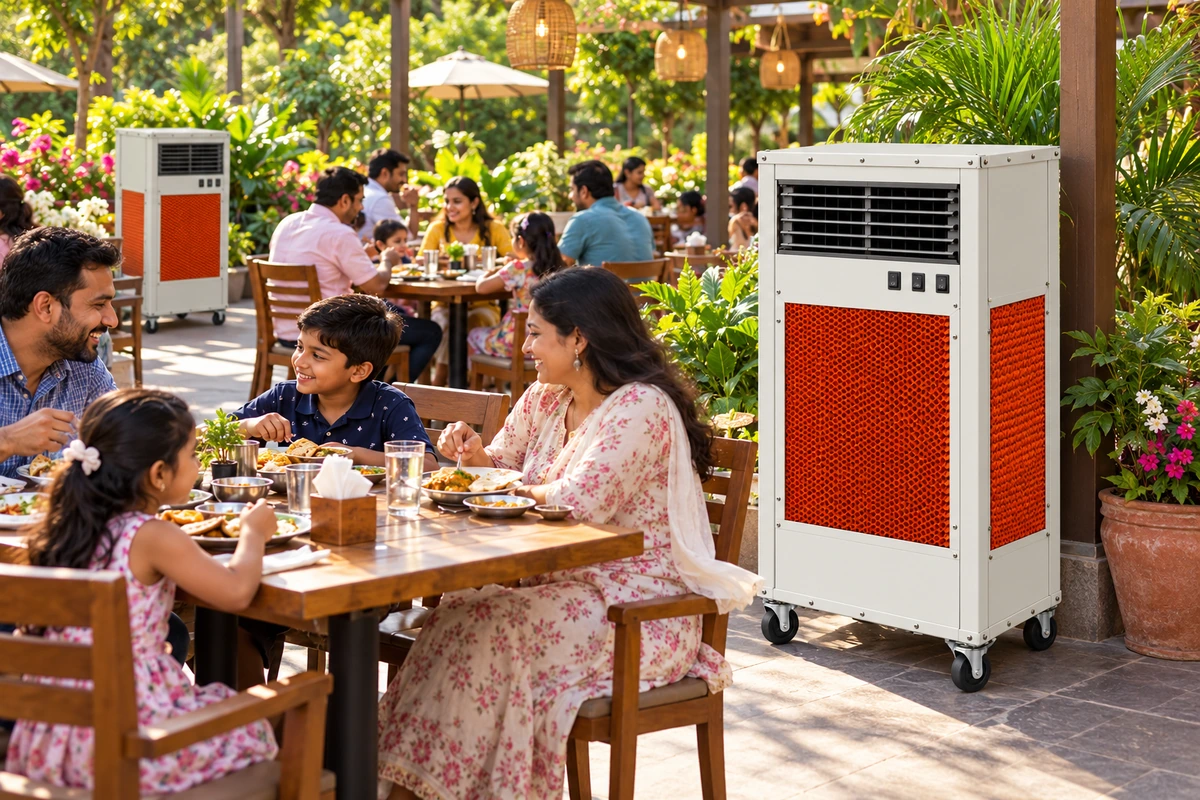
Restaurant: 1,200 sq ft Dining Area, 10 ft Ceiling
- Airflow needed: 1,200 × 5 = 6,000 CFM.
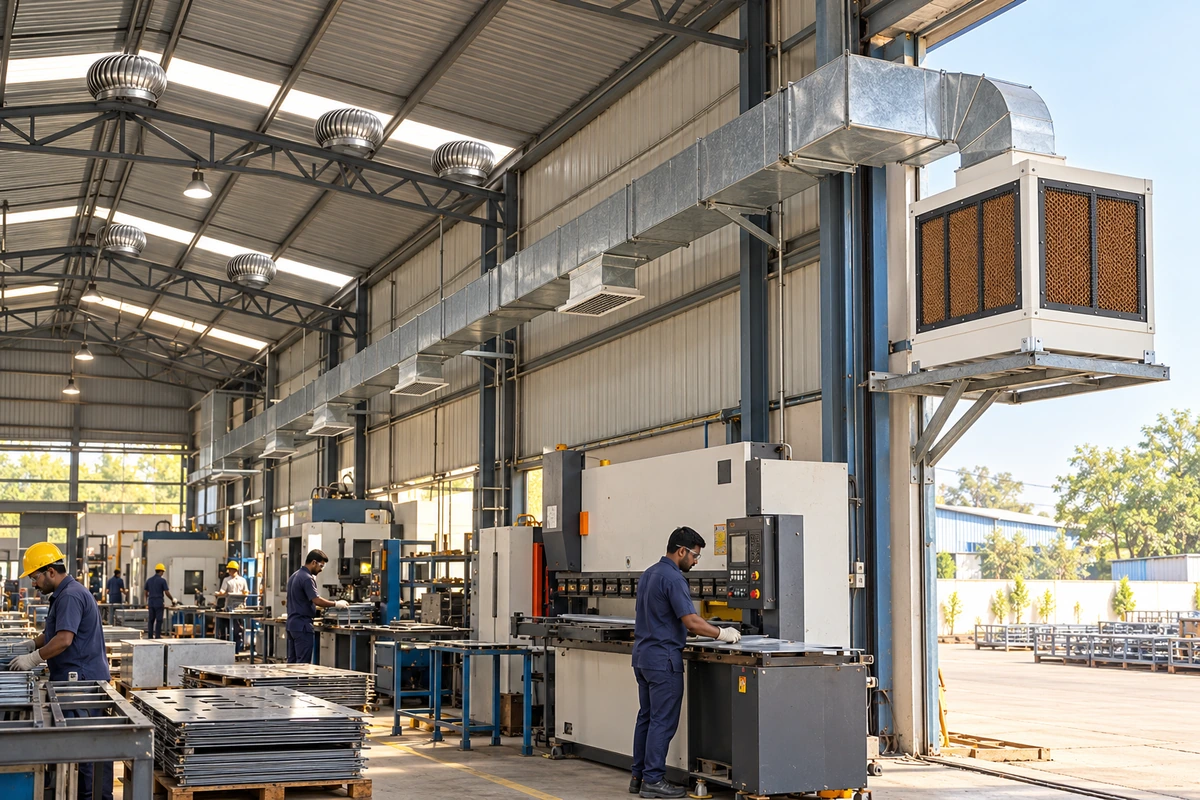
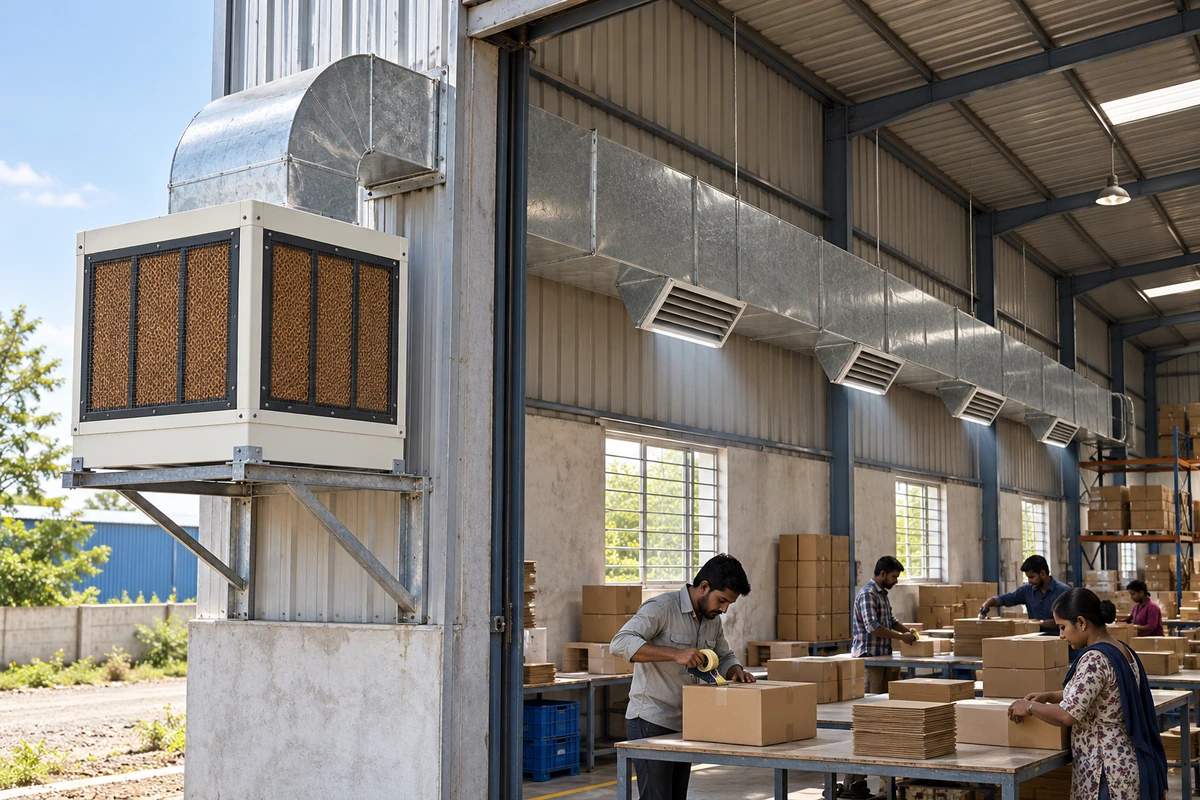
- With three-phase power: one 90 L Industrial Duct Cooler, with 6,500 CFM at 870 W for ₹38,500. It costs about ₹8.70 an hour to run.
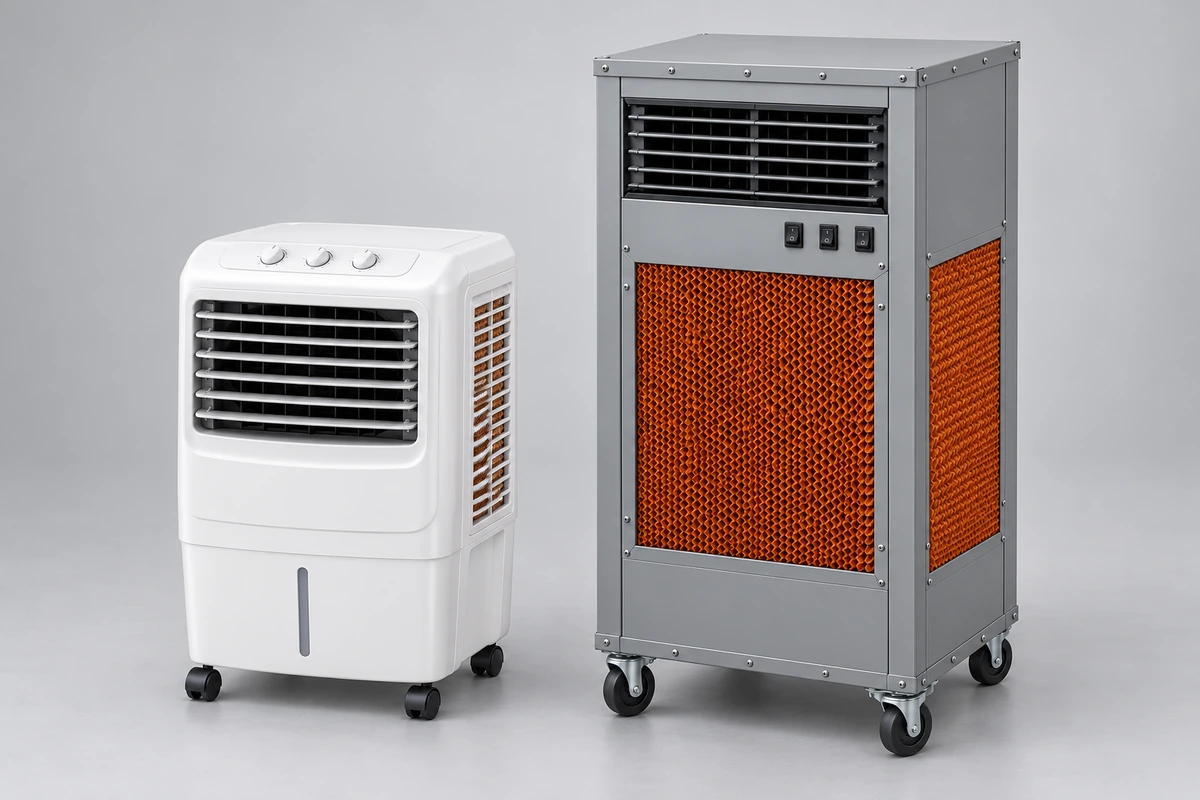
- With single-phase power only: three AUSH Blower Coolers, with 6,900 CFM together at 2,250 W, from ₹25,500 (three 90 L units). They cost about ₹22.50 an hour to run.
The duct cooler costs more to buy but less than half as much to run, so it pays back quickly in a restaurant open 10–12 hours a day.
- Blow cool air across the dining area from the windows or entrance side.
- Do not aim cooler air at the cooking line, where it works against the kitchen exhaust hood. Keep the kitchen exhaust running, because it helps pull air through the dining room.
- In season, clean the pads and tank and refill with fresh water at least once a week to prevent smell.
- If the restaurant must stay sealed with glass doors shut, an evaporative cooler is the wrong choice. Use air conditioning.
Gym: 2,000 sq ft, 12 ft Ceiling
- Airflow needed: 2,000 × 5 × 1.2 = 12,000 CFM.
- Option 1: one 120 L Duct Cooler, with 11,500 CFM at 1.66 kW for ₹43,100.
- Option 2: two 90 L Duct Coolers, with 13,000 CFM at 1.74 kW for ₹77,000. This gives more airflow and two separate outlets.
Sweating members add a lot of moisture, so strong exhaust fans on the wall opposite the coolers matter even more in a gym than elsewhere. Put the cool-air grilles over the cardio and free-weight areas, where people work hardest.
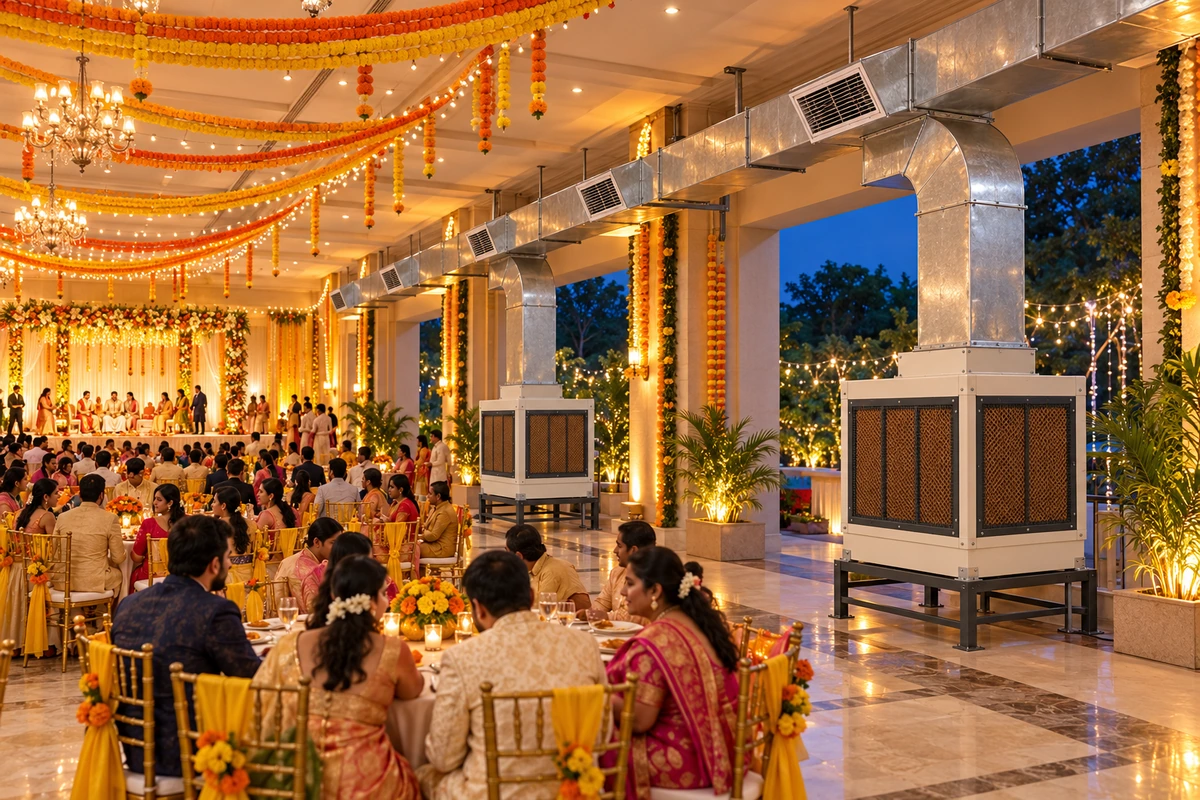
Wedding Hall or Banquet: 6,000 sq ft, 15 ft Ceiling
- Airflow needed: 6,000 × 5 × 1.5 = 45,000 CFM.
- Coolers: four 120 L Duct Coolers, with 46,000 CFM at 6.64 kW. The purchase price is ₹1,72,400 including GST.
- Running cost: about ₹66.40 an hour at ₹10 per unit, or about ₹400 for a 6-hour event.
- Mount the coolers along one long wall and direct the grilles toward the seating, dining counters and stage.
- Keep doors, windows or exhaust fans open on the opposite wall.
- Start the coolers 30–60 minutes before guests arrive, so the pads are fully wet and the hall is cooled down before it fills.
- If you run on a generator, size it for all the coolers together, with a margin. The 90 L, 120 L and 150 L models need three-phase power.
Air conditioning the same hall would need about 30–48 tons of capacity.
Marquees, Pandals and Open Lawns
With open sides, cooled air escapes fast, so cool the people rather than the space. Place coolers around the edges, blowing toward seating, food counters and the stage.
- Single-phase options: AUSH Blower Coolers (2,300 CFM, 750 W) and the 60 L Duct Cooler run on 220 V, which is easy on a small generator.
- Water: larger tanks, such as the 150 L and 190 L Blower Coolers, run longer between refills. Keep water drums nearby for long events.
- Sturdy bodies: metal-body coolers take being moved from site to site better than lightweight plastic ones (see metal vs plastic coolers).
On Humid Days
Evaporative coolers cool much less when the air is already humid, such as during the monsoon, in coastal Mumbai, or in a packed hall with poor exhaust. Improve exhaust first. On very humid days, run the coolers fan-only. For the full picture, see why air coolers stop working in humid weather.
Frequently Asked Questions
How many air coolers do I need for a wedding hall?
Allow about 5 CFM per sq ft at a 10 ft ceiling, and scale up for taller halls. A 6,000 sq ft hall with a 15 ft ceiling needs about 45,000 CFM, or four 11,500 CFM industrial duct coolers.
Can air coolers be used in restaurants?
Yes, in dining areas with open windows or doors and good exhaust. Keep cooler air away from the cooking line, and clean the pads and tank weekly in season. For a sealed, glass-fronted restaurant, use AC.
Which cooler is best for a gym?
A duct cooler with high airflow, such as an 11,500 CFM unit for a 2,000 sq ft gym, combined with strong exhaust fans to remove the moisture from sweating members.
Do air coolers work in a marquee or pandal?
Yes, if you place them around the edges and aim them at the guests rather than trying to cool the whole open space. Single-phase coolers make generator planning easier.
How much does it cost to run coolers for an event?
Four 120 L duct coolers draw 6.64 kW, which is about ₹400 in electricity for a 6-hour event at ₹10 per unit.