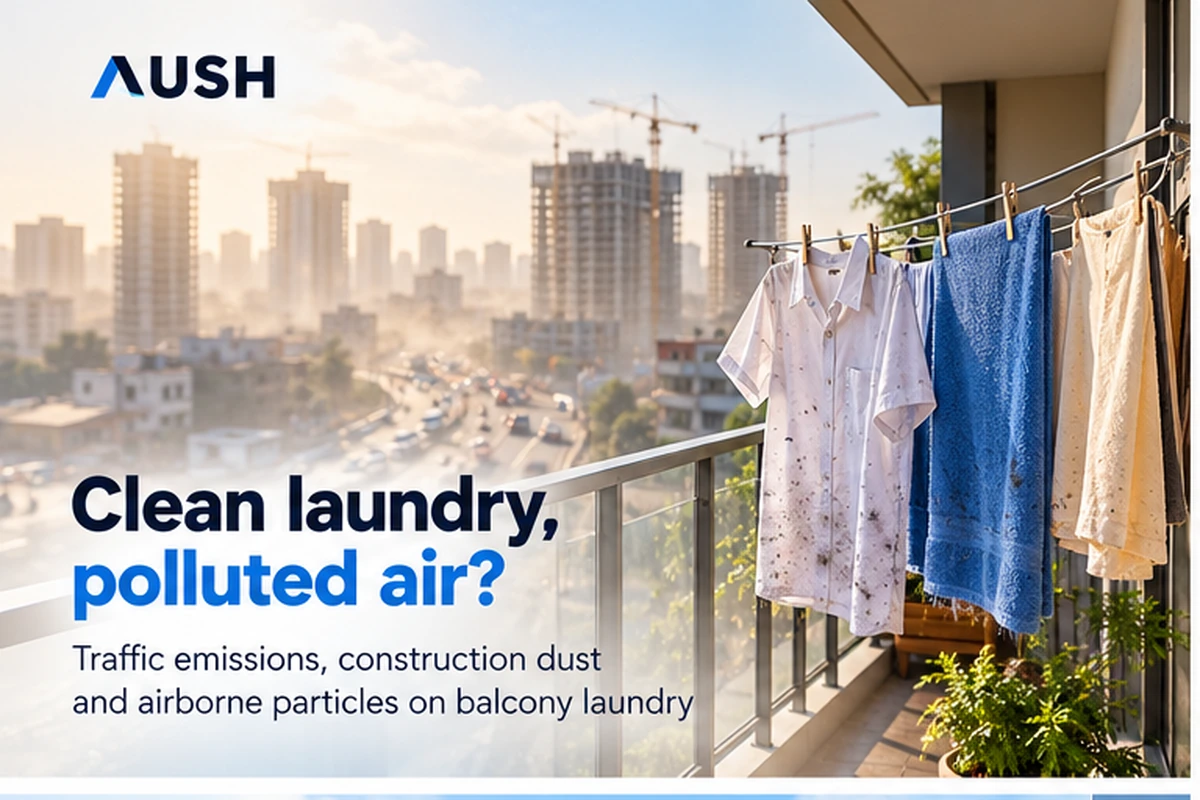
Quick answer: yes, in most Indian cities clothes dried in the open pick up dirt again. Wet fabric acts like a sticky filter. While it hangs on a balcony or terrace for 4 to 8 hours, it catches soot and tyre dust from traffic, cement and sand dust from nearby construction, and smoke, pollen and fine particles from the air. You won't always see it, but it shows up as greying whites, a gritty or stiff feel, dull dark colours and sneezing when you fold the laundry. Drying indoors on high-pollution days, avoiding rush hours and keeping clothes away from the road side of the balcony all help.
Why Wet Clothes Catch Dust So Easily
A freshly washed shirt is not a clean surface for long. Three things make wet laundry good at collecting whatever is in the air:
- Moisture holds particles. Dust that touches a damp surface sticks to it instead of bouncing off. As the water evaporates, the particles stay trapped between the fibres.
- Fabric is a filter. Woven and knitted fibres have millions of tiny gaps. When wind blows through a hanging towel or bedsheet, the fabric strains particles out of the air, much like a mask.
- Long exposure. Clothes hang for hours, often through the morning and evening traffic peaks, so they collect far more than your skin would in a short walk outside.
Once clothes are dry, synthetic fabrics such as polyester can also build up static and attract fine dust while they hang.
Traffic Emissions: Soot, Tyre and Brake Dust
If your balcony faces a road, traffic is likely the biggest source of dirt on your laundry. Vehicles release more than exhaust smoke:
- Exhaust soot: diesel and older petrol engines give off black carbon. It is oily, so it clings to fabric and is hard to wash out. It is the main reason white clothes slowly turn grey.
- Tyre and brake wear: every time a vehicle brakes or turns, it sheds fine rubber and metal particles that drift up to nearby homes.
- Road dust: passing vehicles keep lifting dust from the road surface back into the air. Studies of Indian cities regularly rank road dust and vehicles among the largest sources of particulate pollution.
Traffic pollution is usually worst in the morning and evening rush hours, which is exactly when many families hang out the washing before or after work.
Construction Dust
New buildings, road work, metro lines and even a neighbour's renovation fill the air with cement, sand, brick and stone dust. These particles are heavier than smoke, so they settle within a few hundred metres, often on balconies, window grills and clothes lines.
- Cement and sand dust leave clothes feeling rough or stiff, and dark fabrics look dusty even after drying.
- Cutting tiles, stone and concrete produces very fine dust that travels further than you would expect.
- Dust is worst on dry, windy days and when trucks carry loose sand or debris.
If a site near your home is active, the dust load can change from day to day, so it is worth watching for it rather than drying outside by habit.
Other Airborne Particles: Smoke, Pollen and Spores
Besides traffic and construction, the air around most homes carries:
- Smoke from burning garbage, leaves, crop stubble, wood or coal, and from kitchens and roadside stalls. Smoke particles also leave a smell on fabric.
- Pollen from trees and grasses, which can trigger sneezing and itchy eyes in people with allergies when they wear or sleep on the clothes.
- Mould spores, especially in the monsoon, which settle on damp fabric that dries slowly.
- Industrial emissions in towns near factories, brick kilns or power plants.
Pollution is measured as PM10 and PM2.5: particles smaller than 10 and 2.5 microns. For comparison, a human hair is about 50 to 70 microns thick. India's 24-hour limits are 100 µg/m³ for PM10 and 60 µg/m³ for PM2.5, and many cities cross them for weeks every winter. Coarse PM10 dust is what you feel on your clothes; fine PM2.5 particles are too small to see but still collect in the fabric.
Why Balcony Drying Makes It Worse
The balcony is the most common place to dry clothes in Indian homes, and also one of the most exposed:
- It faces the road. Most balconies open towards the street, so clothes sit directly in the path of traffic dust.
- Lower floors get more dust. Road dust and exhaust are heaviest close to street level, so the first few floors usually collect the most.
- Mornings and evenings are the worst times. On cool, still mornings, especially in winter, a layer of cold air traps pollution close to the ground. The air usually clears by early afternoon, when the ground warms up and the air mixes.
- Monsoon drying is slow. In humid weather, clothes can stay damp for a day or more. They collect dust for longer and can start to smell musty as bacteria and mould grow.
- Birds and insects. Open balconies also invite pigeon droppings and feathers.
Sunlight does have real benefits: it dries clothes quickly and its UV light helps reduce germs. But strong sun also fades colours, and a sunny spot facing a busy road can still leave clothes dirtier than when they came out of the machine.
What Gets on Your Clothes, and When
| Source | What it leaves on clothes | Worst time |
|---|---|---|
| Vehicle exhaust | Oily black soot, grey tinge on whites, fuel smell | Morning and evening rush hours |
| Tyres, brakes and roads | Fine dark dust, gritty feel | Busy traffic, dry days |
| Construction and road work | Cement, sand and brick dust, stiff fabric | Working hours, windy days |
| Smoke from burning | Fine particles, smoky smell | Evenings and winter nights |
| Pollen and spores | Allergens on bedding and clothes | Spring and the monsoon |
Signs Your Clothes Are Picking Up Pollution
- White shirts, vests and bedsheets turn grey or yellowish faster than they should.
- Dark clothes look dull or dusty as soon as they dry.
- Towels feel rough or gritty instead of soft.
- Clothes smell of smoke, fuel or damp instead of detergent.
- Someone at home sneezes, gets itchy skin or watery eyes when folding or wearing fresh laundry.
- You can wipe visible dust off the clothes line or drying stand every day.
How to Keep Washed Clothes Clean While They Dry
- Check the AQI before you hang clothes outside. The CPCB's Sameer app and most weather apps show your city's Air Quality Index. When it is Poor (201 to 300) or worse, dry indoors.
- Skip rush hours. If you dry outside, hang clothes late in the morning and bring them in by mid-afternoon, rather than at dawn or overnight.
- Use the side away from the road. Move the drying stand to the back of the balcony, or to a window that faces a courtyard or garden.
- Keep away from active construction. On days when a nearby site is cutting, drilling or unloading sand, dry indoors.
- Bring clothes in as soon as they are dry. Every extra hour outside is more dust and more sun fading.
- Shield sensitive items. Dry baby clothes, bedsheets, pillow covers and the clothes of anyone with asthma or allergies indoors.
- Wipe the line and stand. A dusty clothes line transfers dirt straight onto wet fabric.
- Shake clothes before folding. It removes loose surface dust, though not the fine particles held in the fibres.
Drying Indoors Without the Musty Smell
Drying indoors keeps out most outdoor dust, but done badly it leaves clothes smelling damp and adds moisture to the room, which can lead to mould on walls. A few habits make it work:
- Use the highest spin speed on your washing machine so clothes start drier.
- Space clothes out on the stand so air can move between them.
- Run a fan, or dry in a room with an exhaust fan, and keep the door closed so the moisture does not spread through the house.
- Avoid drying in bedrooms, where damp air can make sleep less comfortable.
For homes that want clean, quick drying every day, whatever the weather or the AQI, AUSH is launching the Thermo Dryer, a new range for drying clothes indoors, away from road dust, construction dust and smoke. Product details will be announced soon. Message us on WhatsApp to hear first when it launches.
Frequently Asked Questions
Do clothes get dirty again while drying outside?
Yes, in most cities. Wet fabric traps soot, road dust, construction dust, smoke and pollen from the air while it dries. The effect is strongest on balconies facing busy roads, near construction sites and on high-AQI days.
Is it better to dry clothes inside or outside?
Outside in clean air and sunshine is fine. When the AQI is Poor or worse, during rush hours, near construction or in the monsoon, drying indoors keeps clothes cleaner. Dry indoors in a ventilated room so the clothes and the room don't turn musty.
Why do my white clothes turn grey after drying on the balcony?
Usually because of soot from vehicle exhaust. It is oily, sticks to wet fibres and doesn't wash out easily, so whites slowly turn grey wash after wash. Drying them indoors or away from the road side helps.
What is the best time to dry clothes outside in a polluted city?
Late morning to mid-afternoon, after the morning rush hour, when the air near the ground usually mixes and clears. Avoid early mornings, evenings and overnight, especially in winter.
Can pollution on clothes affect health?
Clothes and bedding can carry dust, pollen and fine particles indoors and close to your face. People with asthma or allergies, and young children, are usually the most sensitive. Drying their clothes and bedding indoors on bad-air days is a simple precaution.